Showing posts with label snow. Show all posts

Monday, December 13, 2021

Winter Poems - William Blake


Echo Summit, South Lake Tahoe, by Jared Manninen


To Winter

O Winter! bar thine adamantine doors:
The north is thine; there hast thou built thy dark
Deep-founded habitation. Shake not thy roofs,
Nor bend thy pillars with thine iron car.

He hears me not, but o'er the yawning deep
Rides heavy; his storms are unchain'd; sheathed
In ribbed steel, I dare not lift mine eyes;
For he hath rear'd his sceptre o'er the world.

Lo! now the direful monster, whose skin clings
To his strong bones, strides o'er the groaning rocks:
He withers all in silence, and his hand
Unclothes the earth, and freezes up frail life.

He takes his seat upon the cliffs, the mariner
Cries in vain. Poor little wretch! that deal'st
With storms; till heaven smiles, and the monster
Is drv'n yelling to his caves beneath mount Hecla.

Silent, Silent Night

Silent Silent Night
Quench the holy light
Of thy torches bright

For possessed of Day
Thousand spirits stray
That sweet joys betray

Why should joys be sweet
Used with deceit
Nor with sorrows meet

But an honest joy
Does itself destroy
For a harlot coy

Soft Snow

I walked abroad in a snowy day
I asked the soft snow with me to play
She playd & she melted in all her prime
And the winter calld it a dreadful crime

BIO: William Blake (1757-1827) was a poet, painter, engraver, and mystic. Born in London, he studied at the Royal Academy School. He became proficient at watercolors and often illustrated books for a living. A dreamer, he hated rationalism and materialism, which stressed science and acute awareness of the physical world. He believed in freedom of thought and inspiring the imagination. He published three books of poetry between 1783 and 1794. He also published several works of mystical writings -- The Book of Thel (1789), The Marriage of Heaven and Hell (1791), and The Song of Los (1795).


Thursday, January 21, 2016

Fire and Ice: Robert Frost


Robert Frost


FIRE AND ICE
 
Some say the world will end in fire,
Some say in ice.
From what I've tasted of desire
I hold with those who favor fire.
But if it had to perish twice,
I think I know enough of hate
To say that for destruction ice
Is also great
And would suffice.


STOPPING BY WOODS ON A SNOWY EVENING
 
Whose woods these are I think I know.
His house is in the village, though;
He will not see me stopping here
To watch his woods fill up with snow.
 
My little horse must think it queer
To stop without a farmhouse near
Between the woods and frozen lake
The darkest evening of the year.
 
He gives his harness bells a shake
To ask if there is some mistake.
The only other sound's the sweep
Of easy wind and downy flake.
 
The woods are lovely, dark, and deep,
But I have promises to keep,
And miles to go before I sleep,
And miles to go before I sleep.


BIO:  Robert Frost (1874-1963) was an American poet whose rural New England themes captured the hearts and minds of Americans everywhere. He received four Pulitzer Prizes for Poetry and the Congressional Gold Medal during his lifetime. On July 22, 1961, he was named Vermont's Poet Laureate. He is best known for his poem, "The Road Not Taken."         


Wednesday, February 22, 2012

February. Take Ink and Weep


by Boris Pasternak


February. Take ink and weep,
write February as you're sobbing,
while black Spring burns deep
through the slush and throbbing.

Take a cab. For a clutch of copecks,
through bell-towers' and wheel noise,
go where the rain-storm's din breaks,
greater than crying or ink employs.

Where rooks in thousands falling,
like charred pears from the skies,
drop down into puddles, bringing
cold grief to the depths of eyes.

Below, the black shows through,
and the wind's furrowed with cries:
the more freely, the more truly
then, sobbing verse is realized.

Winter Night

Snow, snow over the whole land
across all boundaries.
The candle burned on the table,
The candle burned.

BIO: Boris Pasternak, author of the acclaimed novel Dr. Zhivago,was born January 29, 1890. The book was banned in the USSR but copies smuggled out of the country earned him the Nobel Prize for Literature in 1958. He was forced to decline the award by the Soviet government and died of lung cancer two years later.  Although initially admiring Lenin and the "splendid surgery" of the Bolshevik Revolution of 1917, he later denounced Soviet Communism as inhumane.


Friday, December 2, 2011

FIRST SNOW

by Dawn Pisturino


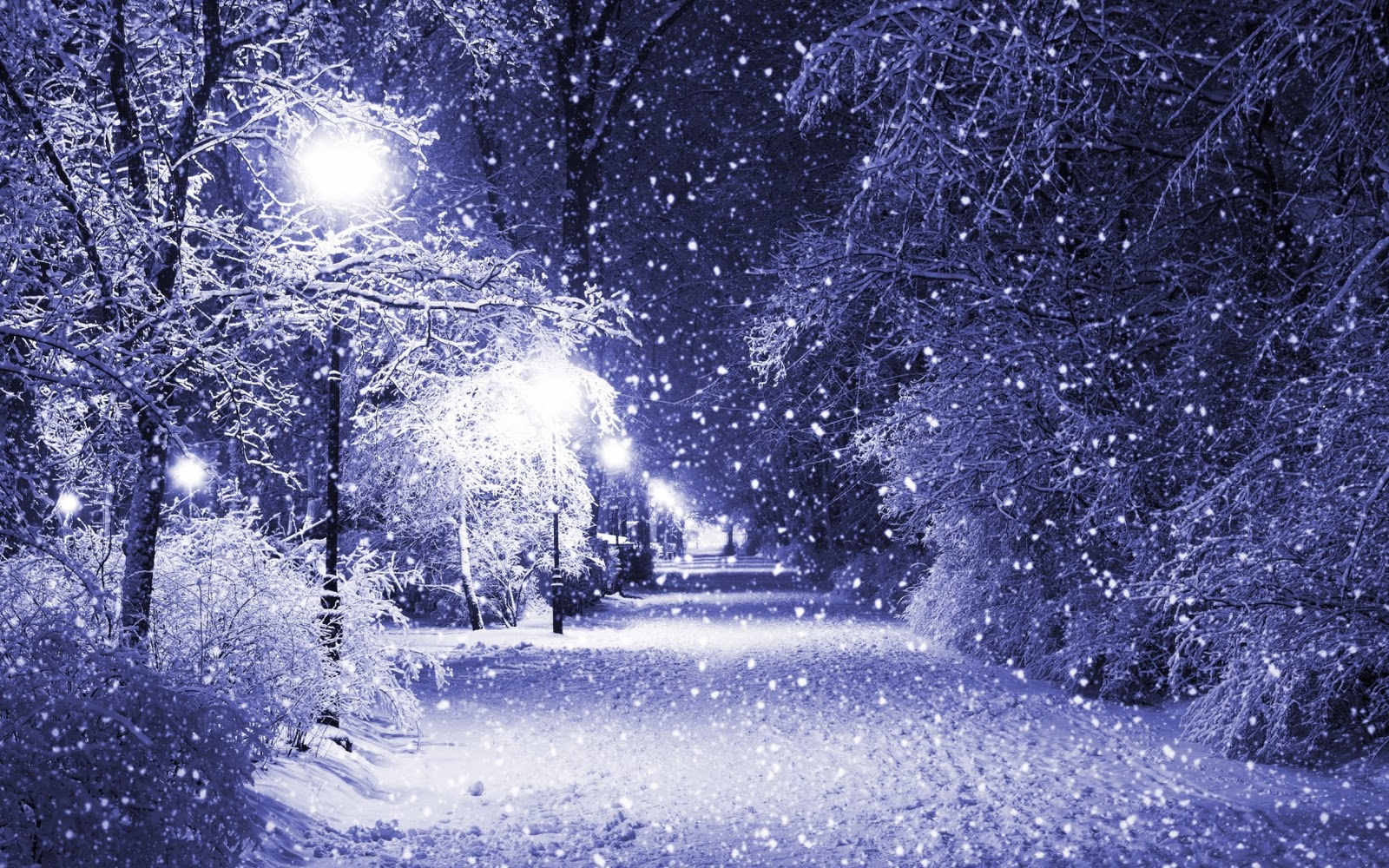
The first white snow of winter
Falls softly on the ground;
The world looks like a fairy land
With snowflakes all around;
The trees dress up like fairies
Dancing on the snow: --
Magic happens everywhere
The fairies dance, you know.

I love the first white winter storm,
The air is cold and frosty;
I stay indoors where it is warm,
But through the windows I can see
How suddenly the world turns white
And disappears beneath the snow;
The season changes overnight
From autumn's bright to winter's glow.

1985
Copyright 2011 Dawn Pisturino. All Rights Reserved.